7 Church Lane
Savannah, Georgia · Est. ca. 1853
Architectural Style
Greek Revival
Historic Name
Judge William B. Fleming House
Known Occupants
6 Families · Since 1851
Introduction
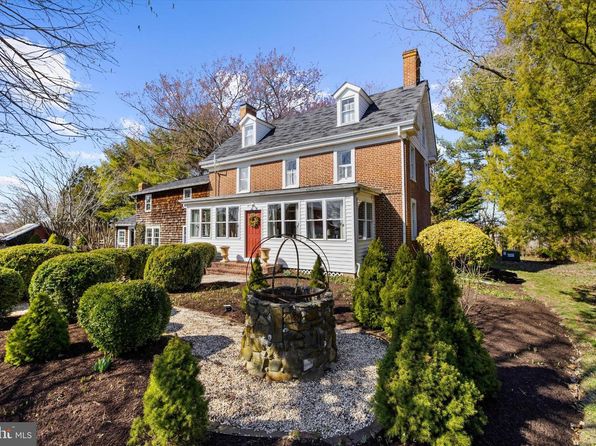
The house at 7 Church Lane was built around 1853 for Judge William B. Fleming, a respected figure on Savannah's Eastern Circuit bench. Fleming had arrived in the city in the 1830s as a young attorney fresh from studying under Judge John M. Berrien in Augusta.
The house Fleming commissioned was a confident expression of the Greek Revival style that dominated Southern architecture in the decade before the Civil War. Its full-height Doric portico and cast-iron balcony proclaimed the prosperity of Savannah's cotton economy.
When Sherman's army entered Savannah in December 1864, the houses along Church Lane were spared the worst indignities of occupation. But the war's end brought economic hardship that would slow new construction for decades.
After Judge Fleming's death in 1878, Catherine maintained the house until her own death in 1891. Colonel Robert A. Mercer, a Confederate veteran turned cotton factor, purchased the property.
The house's survival through periods of neglect was not assured. Many antebellum houses were lost during the mid-20th century. A comprehensive restoration in the 1980s returned the house to its antebellum appearance.
Property Details
Year Built
ca. 1853
Greek Revival
Lot Size
0.18 acres
Assessor 2-0042-09-008
Registry ID
SAV.1247
Historical Commission
Condition
Good
Single Family Residence
Setting · Historic District
The house occupies a prominent corner lot in Savannah's Historic District, one block south of Chippewa Square. The neighborhood is characterized by antebellum townhouses, live oaks draped with Spanish moss, and the city's distinctive grid of public squares designed by James Oglethorpe in 1733.
Architecture
A two-and-a-half-story stuccoed brick dwelling in the Greek Revival style, distinguished by a full-height portico with four fluted Doric columns supporting a wide entablature and pedimented gable. The symmetrical five-bay facade features a central entrance with sidelights and a transom, flanked by floor-length windows with louvered shutters. A cast-iron balcony extends across the second story behind the portico columns.
Building Materials
Foundation
Tabby and brick
Walls
Stuccoed brick
Roof
Standing seam metal
Alterations: Rear service wing expanded in the 1920s; kitchen modernized mid-20th century
Changes Over Time
Original construction
Two-and-a-half-story stuccoed brick Greek Revival dwelling with full-height Doric portico and cast-iron balcony.
Post-war repairs
Minor repairs to stucco and ironwork. The cast-iron gate was replaced with a more ornate Reconstruction-era design.
Service wing expansion
The rear service wing was expanded for modern plumbing. The breezeway was enclosed.
Historic restoration
Comprehensive exterior restoration including repointing, column restoration, and historically appropriate repainting.
Ownership Timeline
Judge William B. Fleming
Built the house ca. 1853. A prominent attorney and Superior Court judge who chose the fashionable Chippewa Ward.
Catherine Habersham Fleming
Inherited from her husband. A descendant of colonial leader James Habersham, active in Savannah's Episcopal community.
Col. Robert A. Mercer
Confederate veteran and cotton factor who rebuilt his fortune through Savannah's recovering port trade.
Eleanor Mercer Ashmore
Maintained the property through two world wars and the Depression. Resisted conversion to apartments in the 1940s.
Savannah Historic Properties, LLC
Managed as a historic property with essential maintenance.
Dr. James & Patricia Whitfield
Undertook comprehensive restoration recognized by the Historic Savannah Foundation.
Notable People
Builder of the house
Judge William B. Fleming (1808 - 1878)
A prominent Savannah attorney and judge on the Eastern Circuit of the Georgia Superior Court. Known for his measured judicial temperament and advocacy for maintaining Savannah's port infrastructure.
Second prominent owner
Col. Robert A. Mercer (1845 - 1912)
A Confederate veteran who served with the 1st Georgia Volunteers. After the war, he rebuilt his fortune as a cotton factor and commission merchant through Savannah's recovering port trade.
Long-term family steward
Eleanor Mercer Ashmore (1878 - 1955)
Robert Mercer's daughter, she maintained the property through two world wars and the Great Depression. A noted Savannah preservationist, she resisted pressure to subdivide the house into apartments.
Area History
Savannah's Historic District was laid out by General James Oglethorpe in 1733 as a series of wards organized around public squares — a plan now recognized as one of the earliest and most successful examples of urban design in North America.
By the 1840s and 1850s, the ward had become one of Savannah's most fashionable residential addresses. Wealthy cotton merchants, attorneys, and judges built substantial brick and stuccoed houses in the Greek Revival and Italianate styles.
The Civil War spared Savannah's architecture when General William T. Sherman famously presented the city to President Lincoln as a Christmas gift in 1864 rather than burning it.
Land Use Over Time
Part of Oglethorpe's original town plan. The land was allocated as a town lot within the expanding grid of wards and squares.
Chippewa Ward established. Lots were subdivided and sold to prosperous merchants and professionals.
Peak of antebellum construction. Judge Fleming built the house ca. 1853.
Post-war decline preserved the existing building stock. The Fleming family retained the property through Reconstruction.
Listed on the National Register in 1966. Carefully restored in the 1980s.
Historic Maps

Map of the City of Savannah (I. K. Tefft)
An early plan showing Savannah's ward system. The Chippewa Ward is visible with its central square.

Bird's Eye View of the City of Savannah (J. W. Hill)
Published three years after the Fleming House was built. The prominent porticoed houses of the Chippewa Ward are clearly visible.
Additional Maps Referenced
Sanborn Fire Insurance Map — Savannah
Detailed building footprints showing the main house and rear service wing at 7 Church Lane.
Historic Photos
Chippewa Square looking south, ca. 1890
The portico during restoration, 1985

Church Lane streetscape, ca. 1910
Doric portico and balcony, ca. 1940

Rear service wing and garden, ca. 1925

Cast-iron gate on Church Lane, ca. 1900
Notable Events
14
March 1853
“Judge Fleming's new residence on Church Lane nears completion and will be among the handsomest in the Chippewa Ward.”
Savannah Daily Republican
2
January 1865
“The houses on Church Lane were spared from General Sherman's headquarters requisitions.”
Savannah Daily Herald
15
November 1891
“Colonel Mercer has taken possession of the Fleming residence on Church Lane and plans improvements to the rear buildings.”
Savannah Morning News
8
April 1942
“Mrs. Ashmore declined proposals to convert several Church Lane properties into apartments for war workers.”
Savannah Evening Press
Deed & Land Records
City of Savannah to William B. Fleming. Town lot in Chippewa Ward, 60 by 90 feet.
Estate of William B. Fleming to Catherine H. Fleming.
Catherine H. Fleming estate to Col. Robert A. Mercer.
Estate of Robert A. Mercer to Eleanor Mercer Ashmore.
Estate of Eleanor Mercer Ashmore to Savannah Historic Properties, LLC.
Savannah Historic Properties, LLC to Dr. James & Patricia Whitfield.
Whitfield Family Trust to current owners.
Sources
- 01Chatham County Deeds: CHD 2-R:417, CHD 4-F:203, CHD 5-N:88, CHD 8-B:341, CHD 14-K:509, CHD 22-G:127, CHD 31-D:882
- 02Sanborn Fire Insurance Maps — Savannah, 1884 and 1916 editions
- 03Savannah Daily Republican, various editions 1850 - 1860
- 04Savannah Morning News, various editions 1880 - 1990
- 05Historic Savannah Foundation archives
- 06Gamble, Thomas. A History of the City Government of Savannah, Georgia (1900)
- 07Lane, Mills. Savannah Revisited: Architecture & History (1994)
Prepared 2025